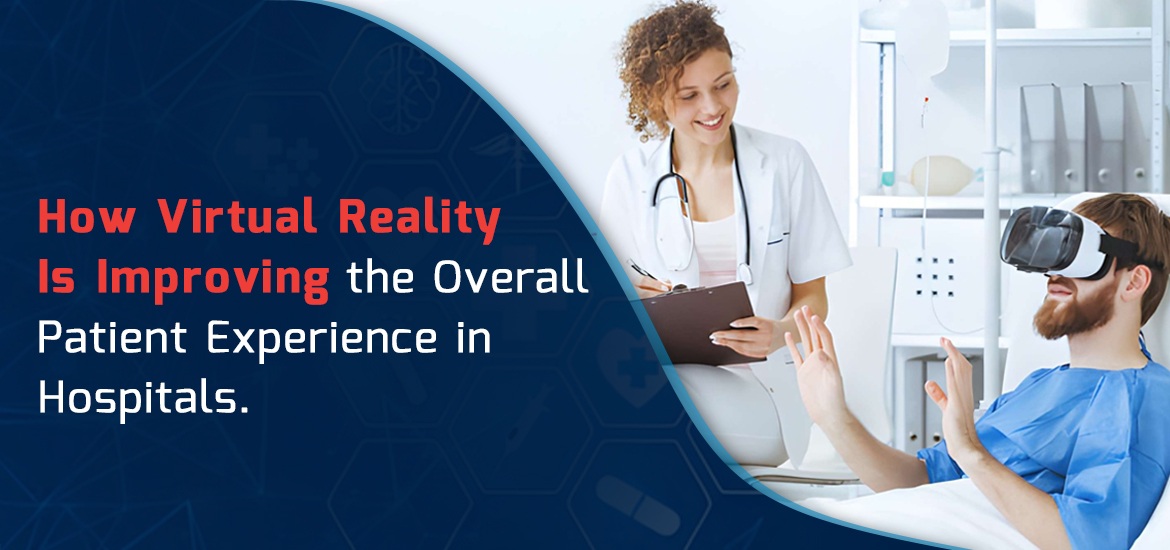
Hospitals are places of healing, but they can also be unfamiliar, stressful, and emotionally overwhelming for many patients. Long waiting times, complex procedures, unfamiliar equipment, and anxiety about outcomes can all affect how people experience care.
Virtual reality (VR) is becoming a potent tool to enhance comfort, engagement, and emotional wellbeing during hospital stays as healthcare organisations search for innovative ways to create more patient-centered environments.
Patient experience is not just about how a person is clinically, but how safe he feels, how clear the information is, how supported he feels, and how much control he is given.
Stress and anxiety can negatively influence sleep, cooperation with care teams, and overall satisfaction. For children, older adults, or people undergoing complex treatments, the hospital environment can feel particularly intimidating.
Digital innovations that focus on comfort and emotional support are being considered to address these challenges.
Virtual reality uses head-mounted displays and audio to place individuals inside immersive digital environments. These environments might include:
In hospitals, VR experiences are typically designed to be easy to use, short in duration, and supervised by clinical staff.
Making patients feel more at ease both before and during medical procedures is one of the most promising uses of virtual reality in hospitals.
Immersion environments have the power to divert focus from clinical settings and substitute them with serene, captivating scenes. The body’s relaxation response can be triggered by gentle visuals, slow motion, and guided breathing techniques, which can reduce tension or feelings of fear.
Waiting rooms, pre-operative spaces, chemotherapy rooms, and imaging scans can all benefit greatly from this.
Hospital stays can be isolated, especially for patients who spend a lot of time in a room or are separated from their loved ones. By enabling patients to explore virtual beaches, forests, museums, or cities worldwide, virtual reality (VR) can provide a sense of escape.
In an otherwise clinical setting, these experiences can improve mood, lessen feelings of loneliness, and offer brief moments of happiness or normalcy. This psychological comfort can be as crucial for chronic patients as medical care.
When patients feel relaxed and informed, they are often more willing to participate in care.
VR can also be used for:
Seeing and experiencing information in an immersive way can improve understanding and reduce fear of the unknown, leading to smoother clinical workflows and better communication between patients and staff.
While older adults may feel lost in strange situations, children frequently experience fear when they visit the hospital.
Both groups can feel safer and more at ease with age-appropriate virtual reality experiences, such as serene nature scenes for seniors or playful environments for kids. These tools are appropriate for a variety of patients because they can be modified to accommodate sensory sensitivity and mobility limitations.
Improving patient experience does not only benefit individuals; it can also help healthcare teams and organizations.
Hospitals exploring VR-based programs have reported potential advantages such as:
When patients feel cared for both a physical and emotional level, trust in healthcare systems grows.
While VR is generally well tolerated, hospitals must follow protocols to ensure safe use. This includes:
VR is not intended to replace medical care, but rather to complement existing treatment and support services.
Virtual Reality in healthcare is probably going to become more prevalent in hospital settings as clinical research keeps expanding, and hardware gets lighter, cheaper, and easier to clean.
Future uses could involve use in patient education and rehabilitation, integration with biometric feedback, and customized experiences based on each person’s stress level.
It is still evident that immersive technology has the power to make hospitals more sympathetic and encouraging environments where patients’ comfort and well-being are prioritized.